
Monday, April 2, 2012
LAD #37 Brown V. Board of education

Sunday, March 25, 2012
LAD #36 Truman Doctrine
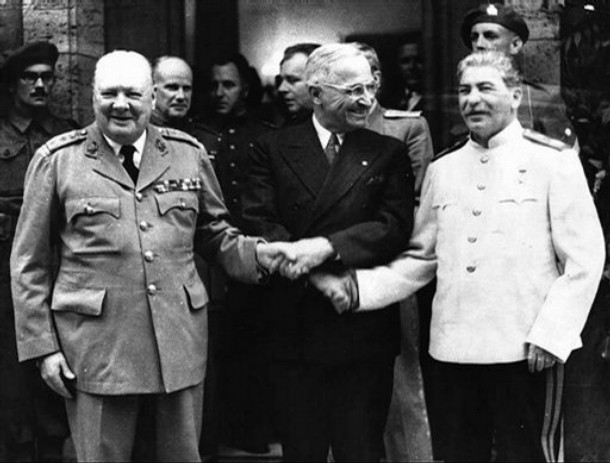
It was no secret that president Harry Truman disliked communism. It was not only communism, but he also disliked the Soviet Union. During WWII the United States aligned themselves with the USSR. This forced the president, and Joseph Stalin to work together, this was hard for Truman to do since he despised Stalin, and thought he was not trustworthy. In 1947 the Truman Doctrine was introduced to describe the support that the US would be giving Greece, and Turkey. He stated that these free people should not be "suppressed" by a outside force that would force its government upon them. It would not only be to protect the people at "risk" but it would also benefit the US, for there to be one less country to fall to communism. These countries would need aid in order to continue to function without communism. In the past England had supported Greece, but considering their current status they could no longer pay for their support, and they requested the United States funding. This policy would be called containment, in other words it would contain communism to its current place. Instead of congress sending military, and all, it would only send 400 million dollars for support.

Monday, March 12, 2012
LAD#35 FDR's executive order
LAD #34 FDR'S declaration of war
Monday, March 5, 2012
LAD #32 The Kellogg-Briand Pact
The Kellogg-Briand pact was a peace treaty primarely between France, and the United States. However it was also signed by England, Japan, Germany, Japan, and Italy.The primay purpose was to prevent war from haoppening, but also to promise that no war would break out between the nations. It was drafted by secratary of state Frank B. Kellogg, and Aristide Briand, and after writting this both men earned the Nobel Peace Prize for their efforts. And Unlike the treaty of Versilles this treaty did in fact pass in U.S. congress. This was formulated along the side, not through the leage of nations. However it was smart, and effective at the time, it would not hold up in the years to come.

Monday, February 13, 2012
LAD #30 Schenck vs. US

In the supreme court trial Schenck vs. US, first amendment rights were up in the air. The first amendment states that all citizens shall have free speech, in other words citizens can talk about whatever they feel, and not worry about being punished. Charles Schenck a secretary for the socialist party sent anti propaganda speaking out against the war. But it was not only the war, but it went against the draft encouraging people to avoid it. He was charged with conspiracy, and in the end the supreme court decided in favor of the United States. Stating that the circumstances of the situation rule against Schenck, in peacetime it is one thing to speack out against the draft, however during wartime it is dangerous to speak out against the draft. Since it is in the country's best interest.
Monday, January 16, 2012
MLK's "I have a dream speech"

Sunday, January 8, 2012
LAD #24 Bryan’s “Cross of Gold” Speech

William Jennings Bryan was, and still considered one of the most popular politicians ever. A lot of that had to do with his honesty, and dedication to his supports. And his supporters were extremely dedicated to him, in a way he was an outsider, because of his support of laborers, and unions. When Bryan gave his speech for the democratic convention in 1896 it was considered one of the most famous convention speeches of all time. One of the most important parts of Byran's campaign was his belief in silver to gold ratio, that being a 16 to 1 ratio. He believed that silver should be coined freely, and used as coins. But unlike politicians today he fought for what his supporters believe in, and that is what a public servant is for. He fought for his followers, and thought that the silver fight would be the best part of his presidency for his followers. Bryan was an extremely honest, and Nobel politician, something we have lost in our current politicians.
LAD #23 the populist party

Wednesday, January 4, 2012
LAD #28

Tuesday, November 29, 2011
LAD #19 Lincoln's 2nd inaugural address
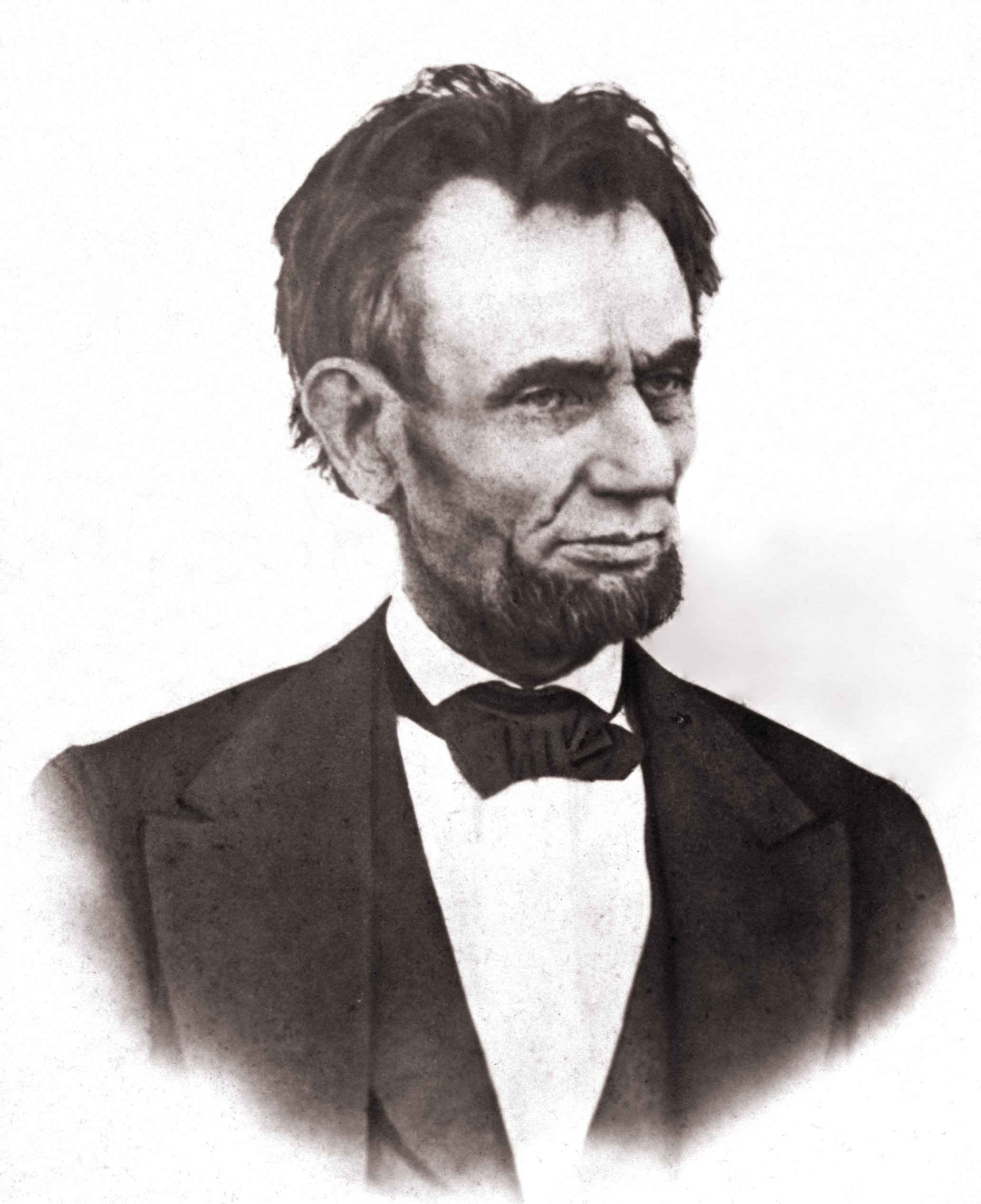
No one knew at the time of Lincoln's second inaugural address that the civil war was nearing it's end. And at the same time Abe Lincoln's life was also near his end. In just over a month both events would follow through, Abe Lincoln would be dead, and the Civil war would be over. For only a first term Lincoln had a tough four years with a civil war that erupted at the beginning of his term, and continued even through to his second. Honest Abe was not well, finding it hard to sleep, he had also lost his young several two years earlier. So through out the entire speech a somber tone is cast around, from Lincoln's words. Lincoln describes a brief history of the war, how many tried to avoid it, but were unsuccessful, but also there were people out their who were trying to destroy the Union. Also the justification of the Emancipation proclamation, that the government had not every fully intervened with the issues surrounding slavery. Slavery was morally wrong, and that it was just that it was ended. To finish of his speech he talked about when the South joins the Union that it should be welcomed back with open arms. And no grudges should be kept.
Monday, November 21, 2011
Dred Scott case

Sunday, November 20, 2011
Lincoln's Gettysburg Address
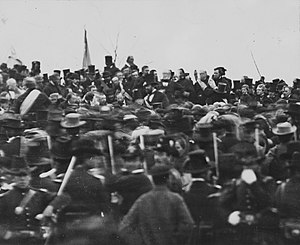
To start Abe Lincoln wrote his famous Gettysburg Address on his train ride to the battlefield. As we know now the battle of Gettysburg is considered the turning point of the war. Up until that point the CSA had been winning the battles, then they were pushing north. This battle is still the bloodiest battle in all American history, Americans fighting their brothers. Lincoln starts his address talking about the foundation which the United States had been founded. then continues to commemorate the fact that the war was fought on the hollow grand that they were standing on. The men that died at Gettysburg will never be forgotten, and what they were fighting for would never be forgotten. Regardless of the fact that their job had not been finished but they had given the greatest sacrifice, and that they would never be forgotten.
Lincoln's first inagural address

Tuesday, November 15, 2011
The Clay Compromise Measures LAD #13.

John Calhoun was extremely outspoken Washington personality, that butted heads on many issues. He was a typical southerner, who had a large amount of money, and believed that slavery was not only for the south, that it should continue to spread.Calhoun spread the word about the importance of balance that needed to be achieved between the states. Calhoun even states that the work down to prevent the country from spiting up was admirable. This issue was a growing topic, almost a pandemic. But then he becomes so bold to say that the North had more control within the government. And he relates this to the new territories being admitted into the U.S. that the power will become unbalanced, with the North having the most control. The North also had been industrializing, which would totally ruin the south. The incoming immigrants would stay in the North, because that is were the best jobs would be, the pollution would be great. The sum up is that the North, and the South would have to balance out, to benefit the entire country.
Monday, November 14, 2011
LAD #12

LAD #11.
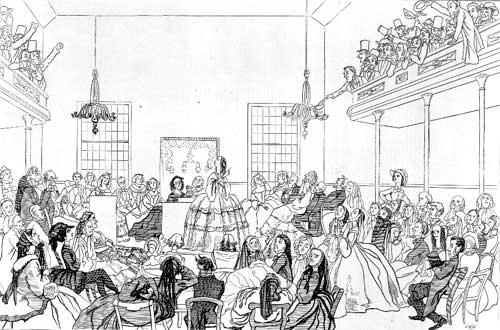
For the final document, which was written by Elizabeth Katy Stanton, and signed July,19th 1848. The basis of the document was from the Declaration of Independence written some sixty odd years earlier. But instead of protesting the king, which was done in the original declaration, this declaration protested the government showing their unhappiness. God had entitled that men and women be equal, and that the United States was not truly a free country if women were not granted the right to vote, among other legal issues. A list was then created to show the issues that they had with the current society. In the end one hundred people signed the declaration, some of which were men. This would be a milestone for women's rights, however women would not earn the right to vote until well after the turn of the century.

Sunday, October 30, 2011
LAD #10 - Monroe Doctrine
The Monroe Doctrine is considered a shining moment in the presidency of James Monroe. Even tough he did not write it, John Quincy Adams sis, his secretary of state.James Monroe was president during the era of good feelings, a period after the war of 1812 that was a build up of nationalism. This documents basis which was delivered by Monroe was that if any European power came into the western hemisphere the United States would intervene. And that the citizens of the U.S. were Americans not colonists. This new policy would be adapted and kept for years to come, thus making the U.S. the "protector" it is today.
Wednesday, October 12, 2011
LAD #9

Monday, October 10, 2011
Columbus Blog #8.

Why would we want to celebrate a man who was not only a fraud, but a flat out jerk? Now speaking for myself, but I'm sure that many would follow, is that I do not like jerks, so why should we celebrate the achievements of one? Today we give Christopher Columbus credit for finding modern day America. But what about the natives? they had been here for thousands of years and called this their home. So didn't they find America? Well if not the Natives than Americus Vespucius, who gave his name to the land. The first place that Columbus landed is the modern day Bahamas, and then moved on to Cuba. Over the course of his first voyage he kidnapped several dozens of natives, and brought them back to Europe. Over the course of his lifetime he made four voyages across the ocean. And with his voyages over, he brought disease over, and would wipe out the natives. He also further opened the gate to more explorers which brought more explorers to the new world, thus hurting the natives home even more. I would graciously give my day off up so that we won't recognize Columbus, and personally i still do not appreciate his accomplishments. Unfortunately there aren't two sides to this pancake.
Subscribe to:
Posts (Atom)